How to Choose the Right Personal Injury Lawyer Near Me
Finding the right legal representative after a sudden injury requires more than simply clicking the first ad you see online. When searching for a personal injury lawyer near me, you need a dedicated advocate who can properly evaluate your claim, stand up to aggressive insurance carriers, and bring proven trial experience to the table.
Evaluating Experience, Reviews, and Fee Structures
When evaluating prospective firms, look beyond basic marketing claims. A firm's actual track record of results speaks volumes. Top-tier attorneys often boast impressive credentials, such as board certification as a Civil Trial Specialist, multi-state bar licenses, or specific scientific credentials like the ACS Forensic Lawyer-Scientist designation.
Here is what you should evaluate when researching local attorneys:
- Proven Case Results: Look for firms that demonstrate a history of significant recoveries, such as multi-million dollar settlements or verdicts in cases similar to yours.
- Client Reviews and Testimonials: Check verified Google reviews. Top-rated local attorneys often maintain hundreds of 5-star reviews highlighting personal attention, responsiveness, and empathy.
- Trial Experience: Many personal injury cases settle out of court, but insurance companies know which lawyers actually go to trial. Choosing an experienced trial advocate ensures your claim is taken seriously from day one, as detailed in this overview of experienced injury litigation standards.
- Contingency Fee Agreements: Reputable personal injury attorneys work on a contingency fee model. This means zero upfront cost to you—the law firm covers case expenses and only collects a legal fee if they secure a financial recovery on your behalf.
Before signing an agreement, make sure you ask essential questions regarding who will actually handle your file day-to-day.
Key Questions to Ask a Personal Injury Lawyer Near Me
During your initial consultation, ask direct questions to gauge whether the attorney is the right fit for your case:
- Will my case be handled directly by an experienced attorney, or will it be passed off to a paralegal or legal assistant?
- What is your specific success rate with my type of injury (e.g., commercial trucking, slip and fall, medical malpractice)?
- How do you approach settlement negotiations versus preparing a case for trial?
- How frequently will your office update me on the progress of my claim?
Connecting with an accessible, local attorney ensures that your case strategy is customized to your regional court system. Local firms rely on powerful online visibility tools like local legal search optimization to ensure injured victims in their immediate community can quickly find trustworthy legal support when an accident occurs.
Determining Case Validity, Liability, and Available Compensation
Not every accident automatically results in a legal payout. To have a valid personal injury claim, your case must satisfy specific legal elements under state law.
Assessing Negligence and Shared Fault Rules
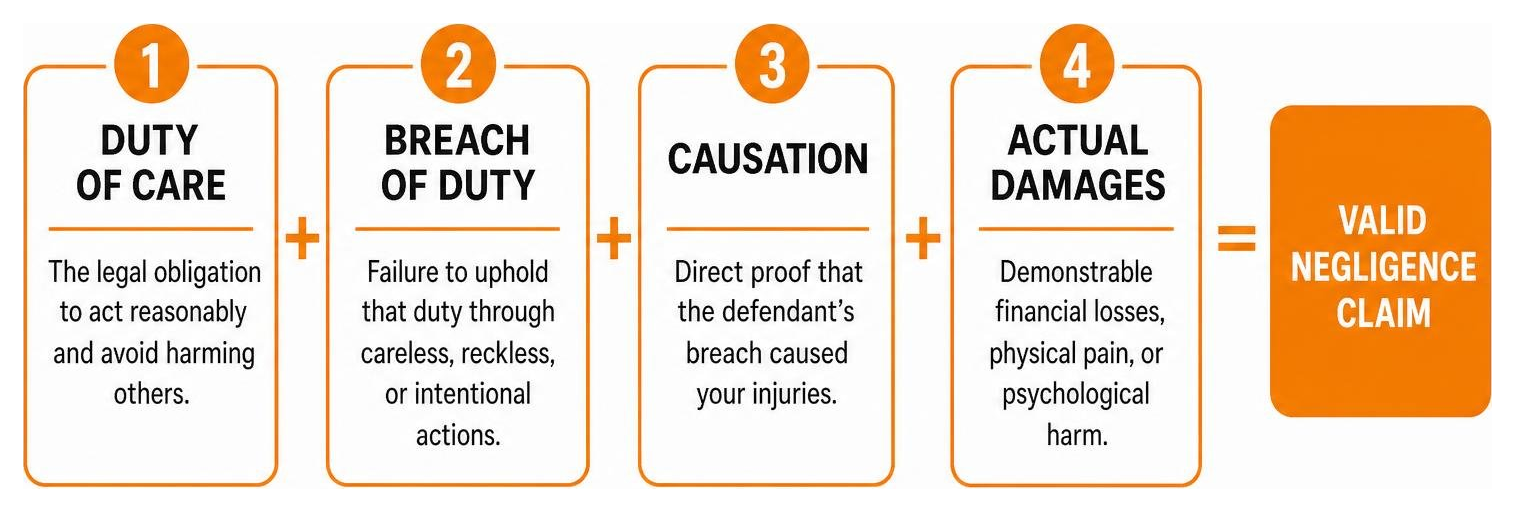
Establishing legal liability requires proving four core elements of negligence:
- Duty of Care: The legal obligation the at-fault party had to act reasonably and avoid harming others (such as a driver obeying traffic laws or a store owner maintaining safe walkways).
- Breach of Duty: Failure to uphold that duty through careless, reckless, or intentional actions.
- Causation: Direct proof that the defendant's breach caused your injuries.
- Actual Damages: Demonstrable financial losses, physical pain, or psychological harm caused by the incident.
Even if you were partially to blame for the incident, you may still be able to collect financial compensation depending on your state's comparative negligence laws.
- Pure Comparative Fault: States like California and Washington allow you to recover compensation even if you are 90% at fault, though your financial recovery is reduced by your assigned percentage of responsibility. You can read more about these rules under comparative fault standards.
- Modified Comparative Negligence: States like Florida and Kansas enforce a 50% or 51% fault threshold. Under Florida's modified comparative fault rules, if you are found to be more than 50% at fault, you are completely barred from financial recovery. If you are 20% at fault, your final compensation award is reduced by 20%.
Types of Recoverable Damages in an Injury Claim
Victims of personal injury accidents can seek compensatory damages designed to make them financially whole again.
| Damage Category | Description | Common Examples |
|---|---|---|
| Economic Damages | Verifiable, out-of-pocket financial losses resulting from the injury. | Immediate medical bills, future therapy costs, lost wages, diminished earning capacity, property damage. |
| Non-Economic Damages | Intangible physical, mental, and emotional impacts caused by the accident. | Physical pain and suffering, emotional distress, loss of enjoyment of life, loss of consortium, permanent disability or disfigurement. |
| Punitive Damages | Additional financial penalties awarded in rare cases involving gross negligence or intentional harm. | Intentionally reckless behavior, severe drunk driving collisions, commercial safety violations. |
Understanding the Personal Injury Claims Process from Start to Finish

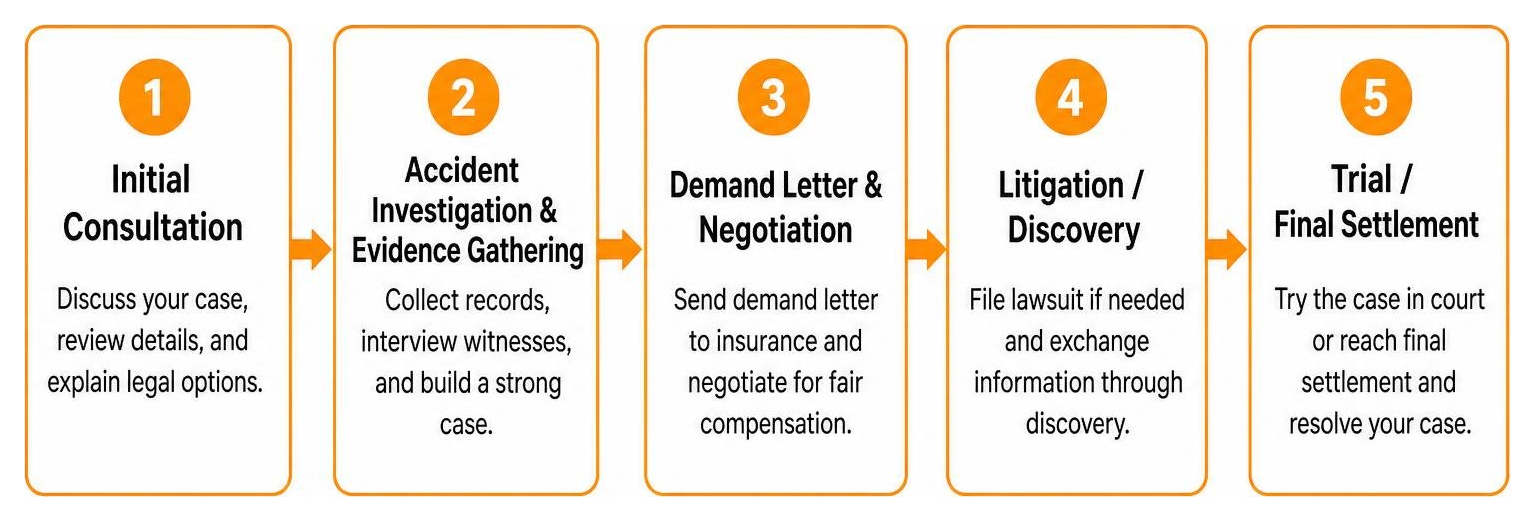
The personal injury claims process involves several distinct steps designed to protect your health, gather evidence, and maximize the overall value of your claim.
Navigating Insurance Tactics and Case Timelines
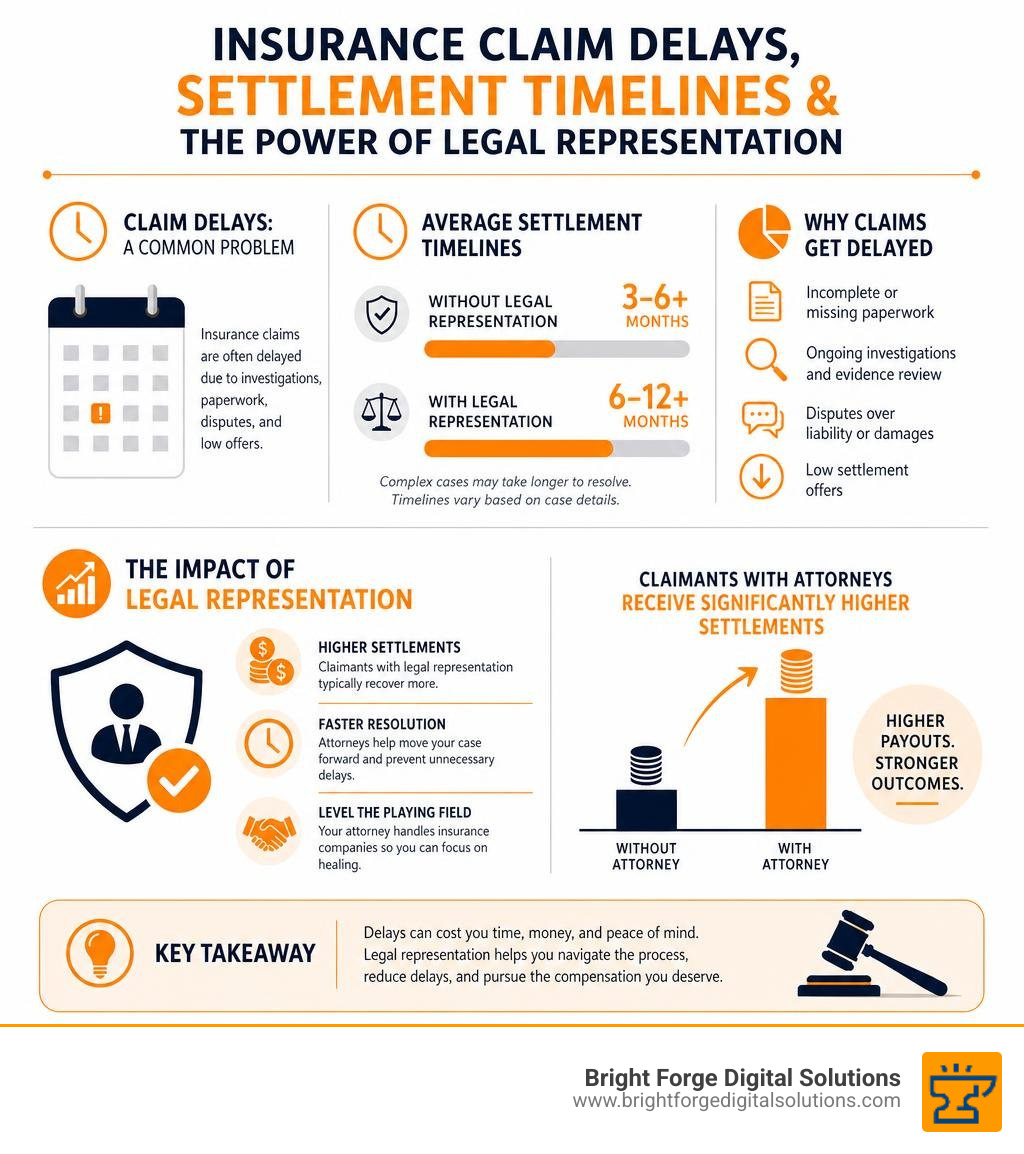
Insurance adjusters work for for-profit corporations. Their main goal is to minimize payout amounts or deny claims entirely. Common insurance tactics include:
- Offering Fast Lowball Settlements: Adjusters often present quick cash settlements shortly after an accident before the true extent of your injuries and long-term medical needs are known. Accepting a first offer releases the insurer from all future liability.
- Exploiting Delay Tactics: Prolonging communication to wear down claimants or push them closer to statutory deadlines.
- Utilizing PIP and Statutory Deadlines: In no-fault states like Florida, you must seek medical care within a strict 14-day PIP window to qualify for Personal Injury Protection medical benefits. Missing this window can compromise your insurance coverage.
- Asserting Subrogation Liens: Health insurance providers, Medicare, or Medicaid may assert subrogation liens against your final settlement to recover medical expenses they paid on your behalf. An experienced attorney can often negotiate these liens down to maximize your net financial payout. Learn more about protecting yourself by reviewing advice on handling insurance adjusters.
Steps to Take When Working With a Personal Injury Lawyer Near Me
Once you retain legal counsel, your attorney takes over the heavy lifting so you can focus on physical recovery:
- Independent Accident Investigation: Collecting surveillance camera footage, police reports, black box data, cell phone records, and eyewitness statements before evidence is lost or destroyed.
- Medical Evidence Assembly: Compiling complete treatment records, diagnostic scans, and medical billing statements to prove injury severity.
- Drafting a Comprehensive Demand Package: Submitting a detailed settlement demand outlining liability, total economic damages, and non-economic harm to the insurer.
- Negotiation and Court Filings: Engaging in settlement negotiations. If the insurance company refuses a fair settlement, your lawyer will file a formal complaint in civil court, initiate discovery, and prepare your case for trial.
Law firms that build trust in their local communities often rely on systematic approaches like client review strategies to highlight transparent client communication and successful trial outcomes.
Frequently Asked Questions About Personal Injury Claims
How Long Do I Have to File a Personal Injury Lawsuit?
Every state enforces a legal statute of limitations that restricts the window of time you have to file a civil lawsuit. Missing this hard deadline forever forfeits your legal right to seek compensation. State deadlines vary significantly:
- California & Florida: Generally two years from the date of the injury for negligence claims.
- New York & Washington: Generally three years from the accident date.
Because statutory exceptions and public entity notice requirements can drastically shorten these timelines, consulting counsel immediately is vital. You can review regional timeline nuances under NYC statute of limitations guidance.
What Should I Do Immediately After an Accident to Protect My Claim?
Taking immediate, proactive steps at the scene and in the days following an accident can protect your health and preserve vital evidence:
- Call Law Enforcement: Ensure an official police report or incident report is generated.
- Seek Immediate Medical Care: Visit an emergency room, urgent care facility, or primary physician right away to document causation and prevent gaps in medical treatment.
- Document the Scene: Take clear photographs and video of visible injuries, vehicle damage, dangerous property conditions, and weather/road conditions.
- Collect Witness Details: Secure names, phone numbers, and contact details of anyone who witnessed the incident.
- Avoid Recorded Statements: Do not provide recorded statements or sign release documents for insurance adjusters without consulting an attorney first.
What Is a Contingency Fee and How Much Does It Cost?
A contingency fee is a performance-based fee structure. Under a contingency agreement, you pay no upfront legal fees or out-of-pocket retainers.
Your attorney finances the cost of managing your claim—including filing fees, expert witness costs, and document retrieval. The lawyer receives an agreed-upon percentage (typically ranging between 33% and 40%) deducted directly from your final settlement or court award. If your lawyer does not recover compensation for you, you owe no attorney fees.
Conclusion

When an unexpected accident leaves you dealing with mounting medical bills, lost wages, and physical recovery, finding an experienced personal injury lawyer near me is one of the most effective steps you can take to safeguard your financial future.
The right attorney brings regional court knowledge, aggressive negotiation skills, and trial readiness to your case—ensuring insurance carriers treat your claim with the seriousness it deserves.
At Bright Forge Digital Solutions, we empower solo practitioners and boutique personal injury law firms to build robust local market presence. Through performance-driven marketing strategies, performance-based SEO, and specialized local visibility tools, we help dedicated legal professionals connect directly with the clients who need them most.
If you run a legal practice looking to dominate your local market, discover how our expert team can help you grow by reviewing our comprehensive guide on Local SEO for Law Firms: The 2026 Playbook to Get Found, Get Calls, and Get Clients.