The Dual Reality of Google Lawyer Reviews: Platform Mechanics and In-House Insights

When attorneys discuss google lawyer reviews, the phrase often carries a dual meaning. On one side, it refers to the public star ratings and client testimonials appearing on a Google Business Profile (GBP) that drive local search visibility and prospective client acquisition. On the other side, it touches upon the internal operational environment of the tech giant itself—specifically, how legal counsel working within Google evaluate risk, govern algorithms, and adhere to global consumer protection standards.
Understanding both perspectives gives solo practitioners and small law firms a distinct advantage. To optimize your firm’s online presence, you must understand the rules established by Google's legal apparatus and global regulatory bodies. Corporate legal teams—led by figures such as Halimah DeLaine Prado, Global | Chambers Profiles, who has served as General Counsel at Google since 2020 after joining as counsel in 2006—build and enforce content moderation policies to align with federal laws.
At the same time, federal regulatory updates have dramatically shifted the enforcement landscape. The Federal Trade Commission (FTC) implemented rules prohibiting fake reviews and deceptive consumer feedback practices, carrying civil penalties of up to $51,744 per violation. Google's internal legal strategy balances platform open-access goals against aggressive legal liability for unverified, manipulated, or paid reviews.
Inside Corporate Legal: Roles and Day-to-Day Realities at Google
To understand why Google’s review filters act the way they do, it helps to examine how an in-house lawyer at Google approaches risk. In-house tech attorneys, such as product counsel, work alongside software engineers, product managers, and executive leadership. Rather than serving as corporate "no-sayers," these attorneys operate as risk-calibrating business advisors embedded directly into product development lifecycles.
Legal leads like Cynthia Liu, Lead Counsel at Google with extensive in-house tech experience, and Steve Seem, Legal Lead for Research, Labs & Quantum, handle environments where standard legal precedents are frequently absent. The day-to-day experience of an in-house attorney at Google includes:
- Product Legal Auditing: Redesigning data flows for new feature launches to meet global statutory obligations while maintaining sub-second user latency.
- Cross-Functional Translation: Converting complex legal mandates into non-legal terminology that software engineers can translate into functional code.
- Pragmatic Risk Calibration: Balancing commercial goals and product launch velocity against potential regulatory fines and litigation exposure.
- Competitive Compensation Structures: Navigating competitive tech legal compensation tiers, which pair base salary with substantial restricted stock units (RSUs) and performance bonuses.
These product counsel design the automated content filters that parse your law firm's incoming client feedback. When Google's algorithms delete a review, it is often because these internal legal teams designed strict compliance parameters to protect the platform from regulatory scrutiny.
AI, Privacy, and Emerging Legal Frameworks in Tech
The intersection of artificial intelligence, data privacy, and online feedback platforms represents one of the fastest-evolving legal landscapes today. As platforms integrate generative AI into search summaries and business reviews, legal teams face novel questions around machine learning transparency, algorithmic bias, and automated content moderation.
In an insightful discussion, Interview with Elspeth White, Deputy General Counsel at Google DeepMind - Kerwin pointed out that generative AI models construct text based on statistical distributions of words rather than an internal mechanism for determining factual truth. This structural reality explains why AI systems can "hallucinate" false facts or non-existent legal precedents if left unmonitored. White emphasized that legal teams must maintain a strict human-in-the-loop framework to evaluate outputs contextually and catch potential errors before final decisions are made.
Similarly, privacy legal experts like CIPP/US/E/M/T Lorrie - AIGP, who served as Corporate Counsel at Google, focus on embedding data protection and privacy frameworks directly into corporate software architecture. Combined with commercial perspectives from leads like Jonathan Miller, Commercial Counsel at Google Cloud, tech legal departments must navigate complex global privacy regulations like GDPR alongside localized consumer protection acts.
For law firms managing their online presence, these broader tech frameworks have concrete implications:
- Automated Algorithmic Moderation: Google uses AI classifiers to parse incoming reviews for patterns indicative of review manipulation, hate speech, or off-topic spam.
- Data Privacy Enforcement: Reviews containing personal identifying details or confidential matter data are automatically flagged and removed to comply with global privacy rules.
- Cross-Border Regulatory Compliance: Platform policies are continuously updated to reflect strict statutory mandates across domestic and international jurisdictions.
How to Ethically Build and Optimize Google Lawyer Reviews
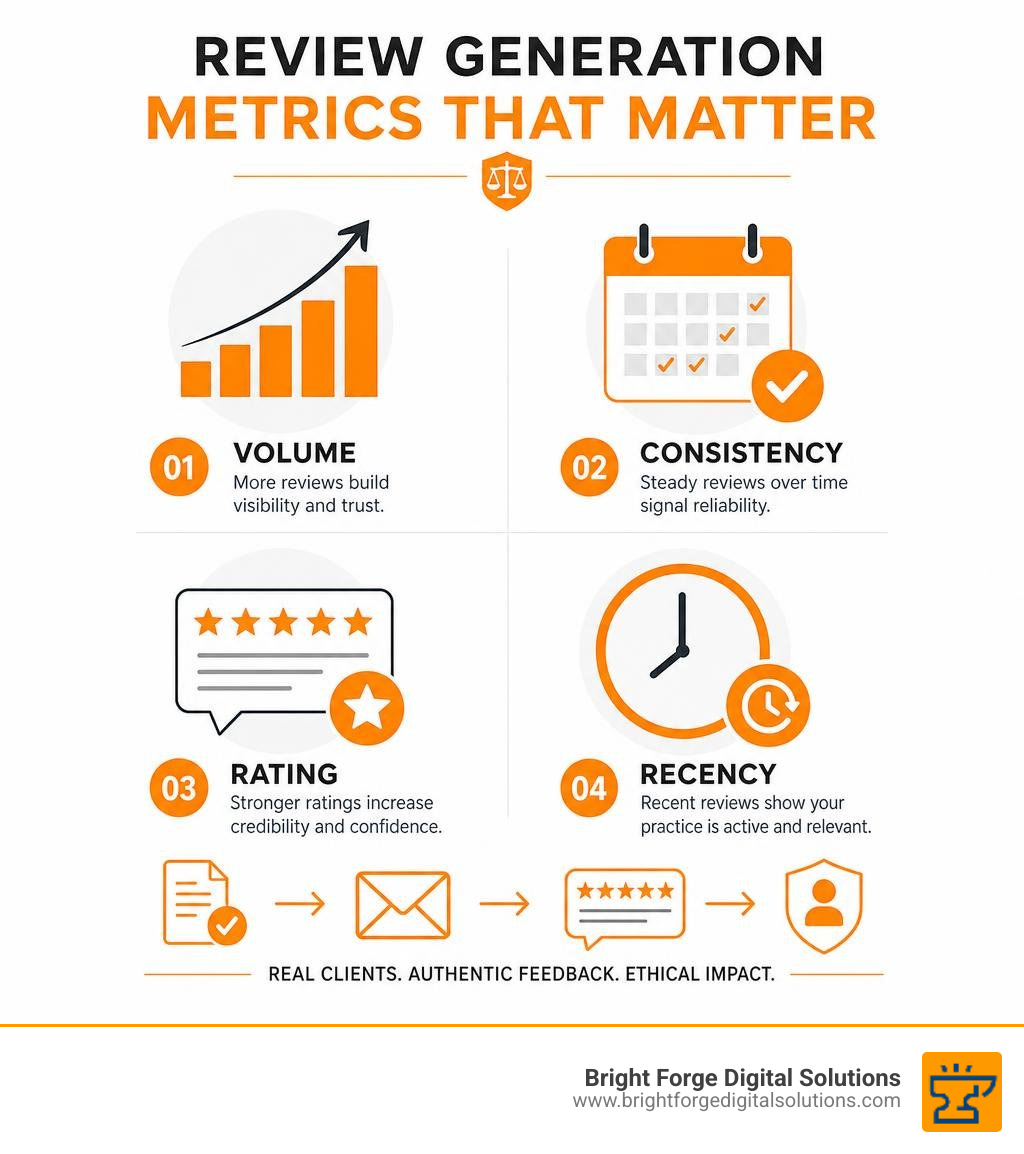
Building a dominant local presence requires a strategic, ethically compliant approach to collecting client testimonials. Prospective clients searching for legal representation rely heavily on review volume, star rating consistency, and recent feedback. However, lawyers cannot generate reviews the same way a local restaurant or retail store might.
To stand out in local search maps, law firms must optimize their Google Business Profile while strictly observing professional ethics rules. Implementing modern Local SEO for Law Firms ensures your practice appears in the coveted "Local 3-Pack" when consumers search for legal help in your jurisdiction.
Key Tactics for Generating Authentic Google Lawyer Reviews
Consistency and volume signal reliability both to prospective clients and to Google’s search ranking algorithms. To build a steady stream of authentic google lawyer reviews, law firms should deploy structured operational workflows:
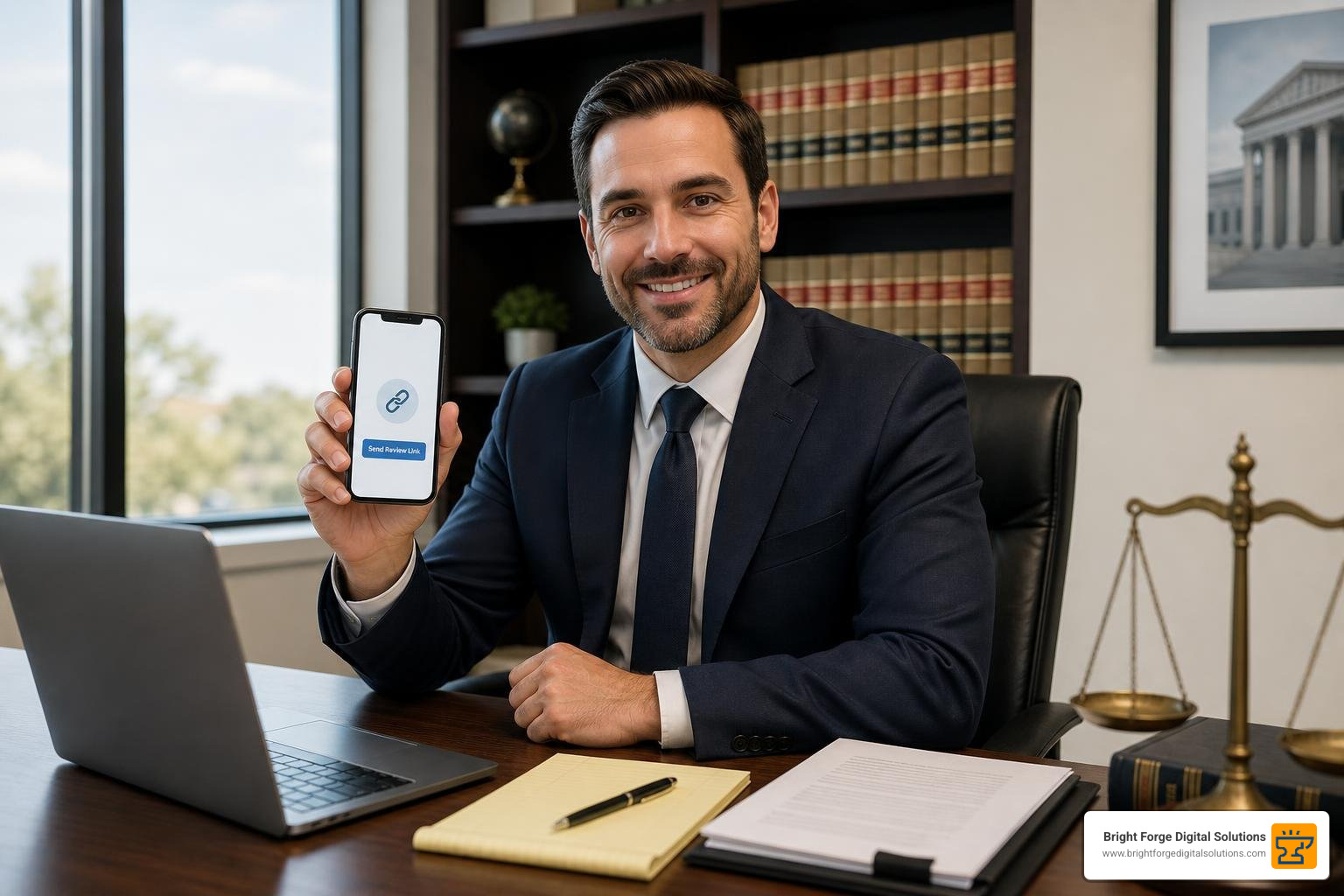
- Direct Email Links: Send direct shortened review links via email immediately after reaching a positive case outcome or completing a closing consultation when client satisfaction is highest.
- Post-Case Follow-Up Workflows: Incorporate standardized review requests into your firm's case-closing checklists so outreach happens systematically.
- Avoid Firm Wi-Fi Networks: Never ask clients to log into their Google accounts and leave a review while connected to your office’s guest or internal Wi-Fi network. Google’s anti-spam algorithms track IP addresses; multiple reviews submitted from the exact same IP address trigger immediate algorithmic removal or shadow-banning.
- Automate Collection Systems: Utilize dedicated, non-intrusive automated outreach tools provided through specialized legal marketing services like Review Generation & Reputation to maintain a steady review cadence.
Ethical Boundaries and Compliance Rules for Legal Reviews
Lawyers operate under strict regulatory standards that govern marketing, client communications, and public statements. Violating these rules can result in state bar disciplinary actions or substantial regulatory fines.
- Strict Prohibition of Incentives: State bar rules and FTC guidelines strictly prohibit offering financial compensation, gift cards, fee discounts, or entry into raffles in exchange for posting a review. Reviews must be entirely uncompensated and uncoerced.
- Preserving Attorney-Client Privilege: Even when a client leaves a detailed public review or a frustrated client posts a negative critique, an attorney cannot reveal confidential case details or confirm representation specifics without explicit authorization.
- FTC Fake Review Regulations: The FTC enforces penalties up to $51,744 per violation for businesses caught generating fake reviews, purchasing reviews from third-party networks, or manipulating client feedback metrics.
- Consumer Review Fairness Act (CRFA) Compliance: Law firms cannot include non-disparagement clauses or penalty restrictions in engagement agreements to prevent clients from writing honest negative reviews. The CRFA voids such contract terms and treats them as illegal practices.
Managing and Removing False or Negative Google Lawyer Reviews

Receiving an unfair, inaccurate, or fake negative review can feel like an existential threat to a solo or small legal practice. However, handling bad reviews requires objective analysis rather than an emotional reaction. Understanding the platform's formal moderation channels and legal limitations allows you to address negative feedback calmly and effectively.
To review the comprehensive suite of reputation management solutions designed specifically for legal practices, explore our dedicated Services page.
Responding Legally and Ethically to Negative Google Lawyer Reviews
When a negative review appears, your public response is viewed by every prospective client who inspects your business profile in the future. A calm, measured response demonstrates professionalism, accountability, and emotional intelligence.
| Review Type | Recommended Response Strategy | Ethical & Legal Considerations |
|---|---|---|
| Legitimate Dissatisfied Client | Acknowledge the feedback politely, express commitment to quality service, and invite the reviewer to discuss the matter privately via phone or email. | Do not confirm case facts, legal strategy, or representation specifics. Protect attorney-client privilege completely. |
| Fake or Non-Client Review | State clearly and professionally that your records show no record of a formal client relationship, while providing a direct contact address for further verification. | Keep the tone objective. Avoid confrontational language or accusations of fraud in public forum comments. |
| Defamation / Terms Violation | Document evidence, submit formal content removal requests through Google Business Profile, and escalate to Google Support. | Do not rely on suing Google; CDA Section 230 protects platforms from third-party content liability. |
Key Response Rules:
- Maintain Confidentiality: Never disclose sensitive facts, case numbers, or financial arrangements in a public response.
- Move the Conversation Offline:
Provide a direct phone number or dedicated email address (e.g.,
management@yourfirm.com) to take the dispute off the public forum. - Dilute Unremovable Feedback: Generating a continuous volume of legitimate, non-incentivized positive reviews naturally dilutes isolated negative comments and restores your star average.
- Cross-Platform Verification: Prospective clients often cross-reference Google ratings with legal directories like Avvo or legal industry awards. Maintaining consistent quality across platforms cushions the impact of an isolated bad review.
Legal Remedies and Official Escalation Steps for Illegal Feedback
If a negative review violates Google’s explicit content policies—such as containing hate speech, harassment, fake engagement from a non-client, or clear conflicts of interest—you can pursue formal platform escalation.
- Document and Preserve Evidence: Immediately capture clear screenshots of the review, the reviewer's profile, timestamps, and any relevant internal logs demonstrating the post is fraudulent or inaccurate.
- Flag via Business Profile Dashboard: Navigate to your Google Business Profile, select the three-dot menu next to the review, and choose the specific policy violation category (e.g., Spam , Conflict of Interest , or Profanity ).
- Escalate to Google Business Support: If automated flagging fails, submit a formal appeal through Google Business Support with attached documentation proving the review violates platform terms.
- Understand Platform Immunity (CDA Section 230): Under Section 230 of the Communications Decency Act (CDA) and Supreme Court precedents like Gonzalez v. Google , digital platforms are generally immune from liability for content posted by third-party users. Your legal remedy lies against the individual posting fake content, not against Google.
- Direct Legal Remedies Against Reviewers: In egregious cases involving clear defamation or extortion, attorneys can issue formal Cease and Desist letters or seek preliminary injunctive relief against known individual posters.
- Troubleshooting Map Cache Glitches: If an approved review removal or profile edit fails to update properly on Google Maps, log into your GBP dashboard, edit your address location, slightly move ("wiggle") the map marker pin, and click save. This forces Google’s system to clear its local cache and refresh your public listing data.
Frequently Asked Questions About Google Lawyer Reviews
What is the day-to-day experience of an in-house lawyer at Google?
Working as an in-house lawyer at Google involves a blend of technical complexity, pragmatic risk calibration, and cross-functional collaboration. Attorneys operate directly alongside software developers, product managers, and executive teams. Rather than vetoing initiatives, they focus on finding legal avenues to launch innovative technologies—such as machine learning products and cloud infrastructure—while navigating strict global privacy, security, and antitrust regulations.
How can law firms safely ask clients for Google reviews without violating ethics rules?
Law firms can safely solicit Google reviews by sending direct email or SMS requests to clients after reaching a positive case outcome. Requests must be completely uncompensated—offering gifts, discounts, entries into raffles, or financial incentives violates state bar rules and FTC regulations. Furthermore, remind clients to submit reviews from their personal mobile devices or home internet connections rather than using your law firm’s guest Wi-Fi, which can trigger Google’s automated IP spam filters.
What legal protections exist against fake or defamatory Google reviews?
Businesses are protected against deceptive reviews by the FTC Trade Regulation Rule, which carries civil penalties up to $51,744 per violation for deceptive review practices. Additionally, the Consumer Review Fairness Act protects honest consumer feedback while allowing businesses to remove illegal, profane, or defamatory statements. While Section 230 of the Communications Decency Act shields platform hosts like Google from direct liability, law firms can flag policy-violating posts through Google Business Profile support or pursue direct legal remedies against identified bad-actor reviewers.
Conclusion

Mastering google lawyer reviews requires a balanced approach. It combines understanding the internal legal and technical mechanics governing Google’s platforms with executing an ethical, proactive strategy to gather authentic client feedback.
By focusing on direct client outreach, protecting client confidentiality, refusing unapproved incentives, and handling rare negative reviews with calm professionalism, your firm can build a resilient online reputation that drives long-term practice growth.
At Bright Forge Digital Solutions, we specialize exclusively in helping solo practitioners and small law firms navigate local search strategies, review acquisition workflows, and Google Business Profile management. Through our risk-free, performance-based pricing model, you pay only when your firm achieves target first-page keyword rankings on Google search.
Ready to grow your legal practice's online visibility without the stress? Learn how our specialized Review Generation & Reputation systems can transform your law firm's local presence today.